
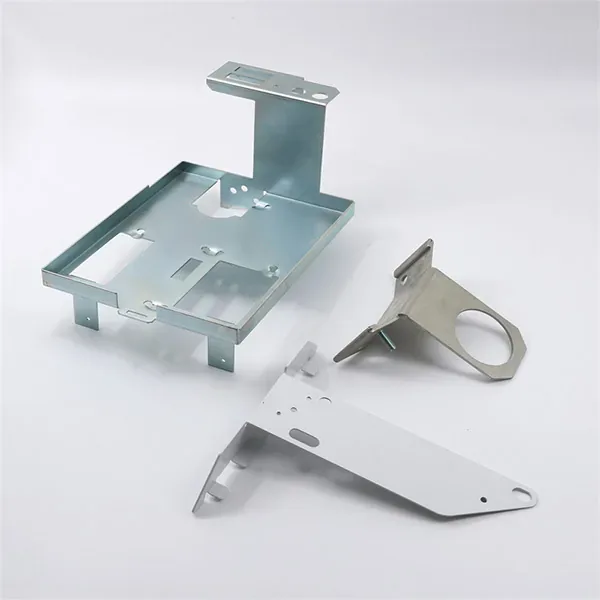
Short answer: Stamped metal clips and spring clips need more than a flat profile. The design must control material temper, bend radius, springback, insertion force, retention force, burr direction, plating, and fatigue risk. A useful RFQ should include the mating part, installation direction, load requirement, cycle expectation, finish, and whether the clip must conduct electricity or only retain another component.
This guide is for buyers and engineers sourcing spring clips, retaining clips, grounding clips, bracket clips, EMI clips, battery clips, and small stamped fastening parts. These parts often look simple, but they fail when spring force, material, finish, or assembly conditions are not defined.
Send drawings, mating component details, material preference, quantity, and force requirements through the RFQ form. If the material is not fixed, review the material selection guide before finalizing the drawing.
Common stamped clip applications
Stamped clips are used when a part needs to hold, locate, ground, shield, or snap into an assembly. They can be made from stainless steel, spring steel, phosphor bronze, beryllium copper, brass, or plated steel depending on force, corrosion, conductivity, and cost.
| Clip type | Typical function | Key design concern |
|---|---|---|
| Spring retaining clip | Holds a shaft, panel, housing, or assembled part. | Retention force, fatigue, and bend consistency. |
| Grounding clip | Provides electrical connection between metal surfaces. | Contact force, plating, conductivity, and corrosion. |
| EMI shield clip | Connects covers, shields, and board-level hardware. | Flatness, contact area, burr direction, and solder or assembly condition. |
| Panel clip | Snaps into plastic, sheet metal, or enclosure slots. | Insertion force, tab geometry, and tolerance stack-up. |
| Battery or connector clip | Maintains contact with a cell, tab, terminal, or busbar. | Conductivity, heat, plating, and spring force over time. |
Material choice for stamped clips
Material selection should start with function. Stainless steel is useful for corrosion resistance and spring behavior. Spring steel can provide strong retention at controlled cost but may need coating. Phosphor bronze and beryllium copper are often considered when both spring behavior and conductivity matter. Brass is useful for some electrical and decorative parts, but the exact alloy and temper must be chosen carefully.
Do not quote only “metal clip” when force or conductivity matters. Give the supplier the application, mating material, environment, and expected cycles so material and temper can be reviewed.
Bend radius, springback, and clip force
A clip works because the formed geometry and material spring properties create force. If the bend radius is too sharp, cracking or fatigue can occur. If springback is not controlled, insertion force and retention force may shift from lot to lot.
For formed spring features, connect the drawing review to the springback guide and tolerance planning guide. Testing the mating assembly is often more useful than measuring only the flat blank dimensions.
Burr direction and safe edges
Clips often slide into plastic housings, touch wires, or contact a plated mating surface. A burr on the wrong side can scratch the assembly, change contact force, or create a handling hazard. Define burr direction and no-sharp-edge requirements where the clip touches another part.
If the clip requires plating, burr control should be reviewed before finishing. Sharp edges can create poor coverage, exposed base metal, or flaking risk. See the burr control guide for drawing notes and inspection ideas.
Prototype and production validation
Stamped clips should be checked in the real assembly whenever possible. A flat sample may look correct but fail when pushed into the housing, cycled repeatedly, or plated. For production launch, use first article inspection and functional checks, not only visual approval.
| Validation item | What to check | Why it matters |
|---|---|---|
| Insertion force | Force required to install the clip into the mating part. | Too high can damage housings; too low may loosen in use. |
| Retention force | Force needed to remove or dislodge the clip. | Controls fastening reliability and vibration resistance. |
| Contact resistance | Electrical behavior after assembly and finishing. | Important for grounding, terminals, and battery clips. |
| Cycle behavior | Force after repeated insertion, flexing, or vibration. | Reveals fatigue, stress relaxation, and plating wear risk. |
RFQ checklist for stamped clips
- 2D drawing and 3D model with formed geometry and critical dimensions.
- Material grade, temper, thickness, and allowed alternatives.
- Mating part drawing or photos showing installation direction and contact area.
- Insertion force, retention force, spring force, or functional test requirement.
- Electrical requirement, conductivity, contact resistance, or grounding need if applicable.
- Burr direction, edge condition, plating, passivation, cleaning, and packaging notes.
- Prototype quantity, annual volume, and expected cycle or vibration conditions.
- Inspection method: functional gauge, force test, CMM, optical, or visual edge check.
FAQ
What material is best for stamped spring clips?
It depends on force, corrosion, conductivity, fatigue, cost, and environment. Stainless steel, spring steel, phosphor bronze, and beryllium copper are common options for different clip functions.
Why do stamped clips lose force?
Force loss can come from material temper, over-stressing, poor bend radius, springback variation, heat, plating, or repeated cycling beyond the design range.
Can stamped clips be plated?
Yes. Plating is often used for corrosion resistance or conductivity, but it must be compatible with bend areas, contact surfaces, and burr control.
Should clip force be on the drawing?
Yes when the clip retains, grounds, or contacts another component. A force or functional test is often clearer than relying only on dimensional tolerances.
Are stamped clips suitable for high volume production?
Yes. Progressive tooling can produce clips efficiently when geometry, material, and functional requirements are stable.
What should I send for a stamped clip quote?
Send drawings, mating component details, material, thickness, force requirement, finish, annual volume, and any failure history from the current design.
Request stamped clip review
Use the RFQ form to send your clip drawing, mating part, force requirement, material, finish, quantity, and target lead time. We can review forming risk, springback, burr direction, and inspection needs before quoting.