
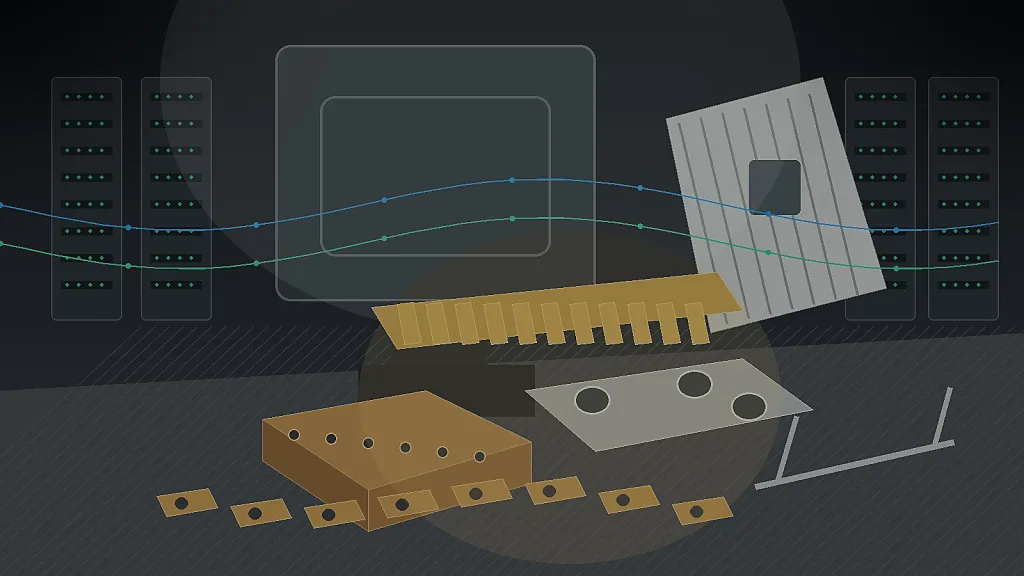
Short answer: Stamped contacts that feed into automated assembly should be quoted with pocket orientation, support points, cover tape, ESD control, reel direction, and shipment evidence. Packaging is part of the process: it must protect contact force, plating, coplanarity, and pick position while still feeding consistently at the buyer’s line.
A stamped contact can be made correctly and still fail the line if it flips in a pocket, rubs a plated surface, sticks to cover tape, or feeds in the wrong orientation. For small contacts, clips, shield fingers, and solderable parts, packaging should be reviewed before production tooling is released.
Use this page with the reel-to-reel stamping guide, ESD-safe packaging guide, thin gauge stamping guide, and packaging and shipping guide.
Tape-and-reel packaging decisions
| Decision | Why it matters | RFQ evidence |
|---|---|---|
| Pocket orientation | The assembly machine needs the same part face and rotation every time. | Orientation drawing, datum face, pick point, and reel winding direction. |
| Pocket support | Thin tabs and contact beams can deform without support. | Support areas, clearance, pocket depth, and no-touch surfaces. |
| Cover tape | Too much or too little peel force can stop feeding or shift parts. | Cover tape type, peel force target, and clean-removal rule. |
| Shipment trial | Parts may pass in a sample tray and fail after vibration or stacking. | Packed photos, drop or transport trial, receiving check, and reject criteria. |
Start with the machine, not the carton
The right package depends on how the buyer loads the part. A pick-and-place process, crimp applicator, bowl feeder, manual assembly bench, and robotic nest all need different orientation evidence. If the buyer says tape-and-reel, the RFQ should still define pocket direction, leader length, trailer length, cover tape, reel diameter, quantity, labels, and ESD need.
The contact zone should not rub against a pocket wall or cover tape if surface condition matters. Spring beams should not be compressed during storage unless that condition is designed and tested. For force-sensitive parts, connect the packaging plan to the spring contact force test guide and define whether force is checked after packing.
Protect geometry and surface condition together
Packaging that protects shape can still damage the surface. Hard pocket edges, paper fibers, loose dust, static charge, humidity, and mixed-lot handling can affect plated contacts. The RFQ should identify no-touch surfaces and whether bags, reels, trays, or pocket tape need antistatic material.
For soldered or press-fit contacts, cleanliness and orientation are tied to assembly yield. Oil, fibers, or rubbed plating may not show in a quick dimensional check. If the contact is soldered, pair this review with the solderability guide. If the contact is press-fit, pair it with the press-fit force guide.
RFQ details to include
- Part drawing with datum face, pick face, contact zone, spring beam, solder area, and no-touch surfaces.
- Assembly method, feeder type, required orientation, pocket drawing if available, and acceptable part movement in pocket.
- Carrier tape or tray material, ESD requirement, cover tape type, peel force target, reel diameter, leader and trailer length.
- Contact force, coplanarity, plating, cleanliness, humidity, shelf life, and whether measurements occur before and after packaging.
- Shipment trial, carton stack limit, label data, mixed-lot rule, photos, receiving inspection plan, and reject examples.
- Prototype quantity, line-trial quantity, annual volume, and target launch timing.
How to compare ပေးသွင်းသူ answers
A strong answer asks for the buyer’s feeding method and explains how the pocket supports the part without touching functional surfaces. It should mention reel direction, cover tape, ESD, and first-shipment evidence. A weak answer only says the ပေးသွင်းသူ can pack in reels.
Ask for photos or drawings of the loaded pocket before the first production shipment. If the part is small or thin, ask whether a pilot reel will be sent for a line trial before mass production. This can find orientation, peel, and pick issues while changes are still cheap.
Send part drawings, assembly method, orientation rules, pocket preferences, ESD needs, and shipment route through the contact page. Use the RFQ form to request a packaging trial when contact force, plating, or automated feeding is critical.
FAQ
When should stamped contacts use tape-and-reel packaging?
Use it when automated feeding, stable orientation, ESD control, or protection of small plated features is needed for assembly.
Can tape-and-reel packaging deform spring contacts?
Yes. Pocket pressure, cover tape, stacking, or poor support can change contact height or force, so force-sensitive parts should be checked after packing.
What causes pocket orientation failures?
Common causes include unclear datum face, wrong reel winding direction, poor pocket support, excessive part movement, static, cover tape pull, or mixed part orientation.
What should be sent for a tape-and-reel RFQ?
Send drawings, pick face, orientation rule, feeder type, pocket or reel preference, ESD need, cover tape requirements, sample quantity, and line-trial needs.