
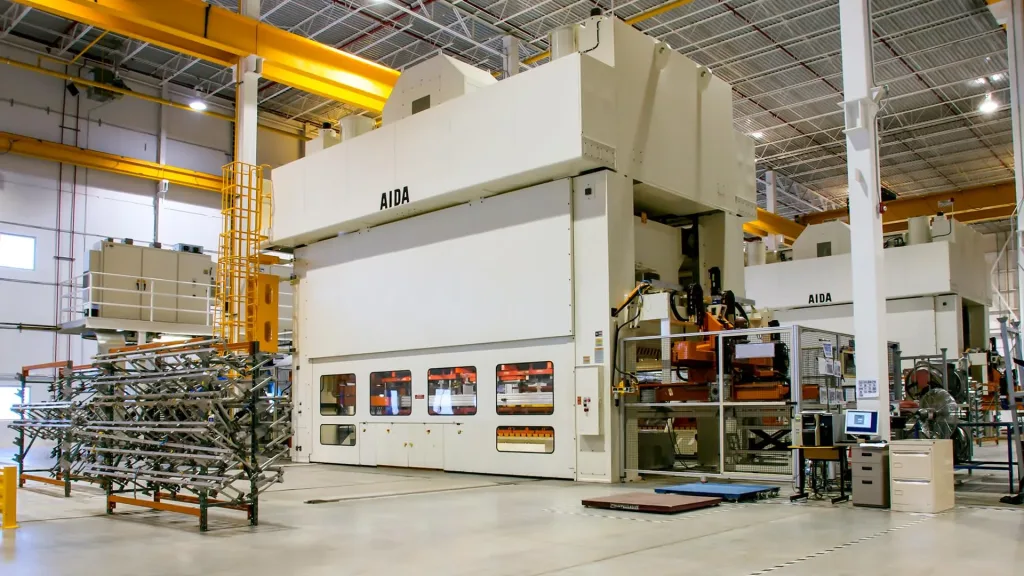
Short answer: maty famindrana fitomboka is worth considering when a part is too large, deep, complex, or separated from strip stock too early for a simple maty miandalana. Buyers should compare transfer tooling by part size, draw depth, forming sequence, material, tolerance, volume, handling marks, inspection, and automation needs. The RFQ should include drawings, 3D files, annual volume, finish, and critical features.
This guide is for buyers comparing maty famindrana fitomboka with maty miandalana fitomboka, deep drawing, single-stage tooling, and secondary forming. It is most useful for larger formed parts, drawn housings, structural brackets, appliance parts, fiara components, and parts that need multiple forming operations after blanking.
If you need process selection help, send drawings, material, thickness, volume, and part function through the RFQ form. For a process overview, see maty famindrana fitomboka services.
What maty famindrana fitomboka does differently
In maty famindrana fitomboka, the part is moved from station to station by a transfer system rather than staying attached to a continuous carrier strip for the whole process. This gives more freedom for some larger or deeper parts, but it also changes tooling cost, handling, transfer marks, speed, and automation requirements.
| Dingana factor | maty famindrana consideration | Buyer question |
|---|---|---|
| Fizarana size | Larger parts may be easier to transfer after blanking. | Does the part fit a strip-fed progressive layout efficiently? |
| Draw depth | Deep or complex forming may need multiple separated stations. | Are draw stages, trim, and restrike operations defined? |
| Fitaovana handling | Transfer fingers or automation can fifandraisana the part. | Are handling marks acceptable on non-critical surfaces? |
| Tooling cost | Transfer tooling and automation can be more involved. | Is annual volume high enough to justify the tooling path? |
| Inspection | Each station may affect final dimensions and formed features. | Which dimensions must be checked after the final operation? |
When maty famindrana fitomboka may fit
maty famindrana fitomboka is often considered when a part needs multiple forming operations after it is blanked, when the geometry is difficult to carry in a strip, or when a drawn or formed part must be handled in a specific orientation. It can also be useful when a part has features on several sides that are hard to complete in a progressive layout.
- Large brackets, frames, shells, or covers.
- Deep drawn or semi-drawn housings that need trim and restrike operations.
- Fizarana with complex side forming, flanges, tabs, or structural features.
- Appliance, fiara, industrial, and enclosure parts with higher production volume.
maty famindrana vs maty miandalana
maty miandalana fitomboka keeps the part attached to a strip as it moves through stations. It is often efficient for smaller, high-volume parts such as terminals, clips, brackets, contacts, and flat or moderately formed components. maty famindrana fitomboka can be better when the part is too large or complex to carry efficiently in a strip.
If the decision is mainly cost, use the maty miandalana cost guide and quote torolalana fampitahana. If the decision is about geometry, review part size, forming sequence, carrier feasibility, and critical surfaces first.
DFM risks for maty famindrana parts
Transfer tooling can solve geometry problems, but it still needs careful DFM. Handling marks, transfer clearances, station-to-station variation, trim edge quality, springback, and formed dimensions should be reviewed before tool build.
| DFM risk | What to review | Related guide |
|---|---|---|
| Springback | Fitaovana, bend sequence, restrike need, and formed dimension tolerance. | Springback guide |
| Draw defects | Draw depth, radius, thinning, wrinkling, and trim allowance. | fisintomana lalina DFM checklist |
| Burrs and trim edge | Burr direction, edge condition, and deburring need. | Burr control guide |
| Hole and slot movement | Whether features are pierced before or after forming. | Holes and slots guide |
Tooling, automation, and maintenance
maty famindrana projects should clarify the automation method, part handling, station layout, sensor strategy, spare inserts, and maintenance plan. These details affect tooling cost and production risk. If the part has long production life, ask how the die will be maintained and how future revisions are handled.
For long-run planning, review the die maintenance and tool life guide. Maintenance is especially important when several stations must stay aligned to control final geometry.
RFQ checklist for maty famindrana fitomboka
- 2D drawing and 3D model with revision level and units.
- Kilasy ara-pitaovana, thickness, temper, coating, and substitute rules.
- Fizarana size, draw depth, formed features, holes, slots, flanges, and trim edges.
- Critical dimensions after final forming and any functional gauges.
- Visible or fifandraisana surfaces where transfer marks are not acceptable.
- Finish, plating, passivation, cleaning, deburring, or packaging requirement.
- Prototype quantity, annual volume, production life, and target fotoana fanaterana.
- Inspection documents: first article, CMM, material certificate, finish report, or control plan.
FAQ
When should I choose maty famindrana fitomboka?
Consider maty famindrana fitomboka when the part is large, deep, complex, or difficult to carry through a progressive strip layout.
Is maty famindrana fitomboka more expensive than maty miandalana fitomboka?
It can be, depending on tooling, automation, and volume. The right comparison depends on part geometry, production life, and secondary operation costs.
Can maty famindrana fitomboka make deep drawn parts?
Yes, transfer systems are often considered for drawn or formed parts that need several operations after blanking.
What are transfer marks?
Transfer marks are possible fifandraisana marks from fingers, automation, or handling between stations. Critical cosmetic or sealing surfaces should be marked on the drawing.
What quality checks are important for maty famindrana parts?
First article inspection, CMM checks, formed dimension checks, burr inspection, flatness, and functional gauges may be useful depending on the part.
What should I send for a maty famindrana quote?
Alefaso drawings, 3D model, material, thickness, formed features, critical surfaces, finish, annual volume, and inspection requirements.
Request maty famindrana fitomboka review
Use the RFQ form to send drawings, 3D model, material, thickness, volume, finish, and critical features. We can review whether maty famindrana fitomboka, maty miandalana fitomboka, deep drawing, or another route fits the part before quoting.