
Short answer: A fitomboka metaly mpamatsy quality audit should confirm that the mpamatsy can control tooling, material traceability, first article inspection, in-process checks, burrs, plating, packaging, corrective actions, and drawing revisions. The audit should focus on evidence, not certificates alone. Ask for sample reports, process controls, and RFQ review discipline before placing production orders.
This checklist is for buyers, quality engineers, and sourcing teams comparing fitomboka metaly suppliers. It is especially useful before moving a part from prototype to production, resourcing a rejected part, or approving an overseas fitomboka mpamatsy.
If you want a mpamatsy capability review for a new stamped part, send drawings, material, tolerance, finish, annual volume, and quality document requirements through the RFQ form.
What a mpamatsy audit should prove
A quality audit should answer one practical question: can this mpamatsy repeatedly make the part you are buying? A general ISO certificate may be helpful, but it does not prove that a mpamatsy can control your material, tool, geometry, finish, or inspection plan.
| Audit area | What to check | Evidence to request |
|---|---|---|
| Drawing review | DFM questions, critical features, tolerances, burr direction, revision control. | RFQ review notes, marked drawing, open issue list. |
| Tooling control | Tool design, tryout, maintenance, spare inserts, storage, ownership. | Tooling plan, maintenance record, sample approval record. |
| Fitaovana control | Grade, thickness, temper, certificate, lot traceability, substitute approval. | Fitaovana certificate and receiving inspection record. |
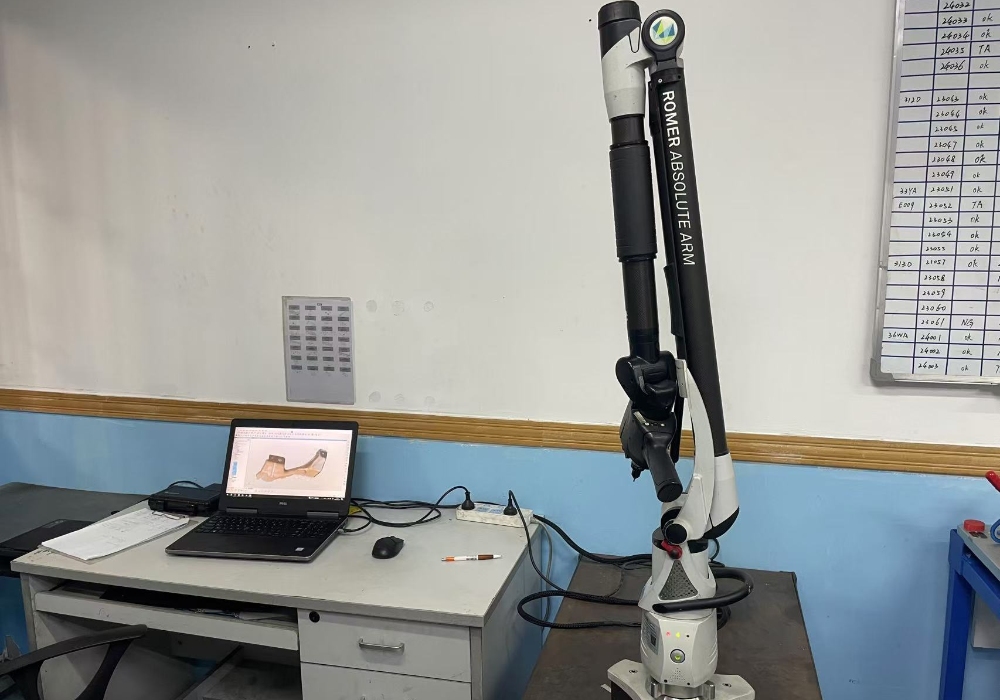
| Inspection capability | FAI, CMM, gauges, calipers, functional fixtures, visual standards. | Sample dimensional report and gauge list. |
| Dingana control | Setup approval, first/last piece checks, in-process inspection, nonconforming control. | Control plan, inspection frequency, defect containment record. |
RFQ review discipline
A capable mpamatsy asks useful questions before quoting. If the mpamatsy quotes a complex stamped part without asking about thickness, tolerance, finish, annual volume, burr side, inspection, or fananana fitaovana, that is a risk signal.
- Does the mpamatsy identify features that may need tooling changes or DFM review?
- Do they separate tooling cost, sample cost, and unit price?
- Do they explain whether the part fits prototype tooling, single-stage dies, progressive dies, or transfer dies?
- Do they ask about finish, packaging, and inspection documents?
- Do they control drawing revision before sample approval?
For preparation details, use the fitomboka metaly RFQ checklist before sending a formal package.
If the mpamatsy is outside your country, combine this audit with the China fitomboka metaly mpamatsy checklist. For part-level requirements, compare the audit evidence against the fitomboka metaly quality control checklist and the fitomboka metaly tolerances guide.
Tooling audit questions
fitomboka quality depends heavily on tooling. The audit should confirm that the mpamatsy can design, build, try out, maintain, and repair tools in a controlled way.
- Who designs the tool and who approves the strip layout?
- What is the sample approval process after tool tryout?
- How are punch wear, die clearance, pilots, sensors, and springs checked?
- Are spare inserts or critical wear parts prepared for production tools?
- How are tooling changes recorded after customer approval?
- Who owns the tool and what happens if production moves later?
For cost and tooling scope questions, review the tooling cost guide.
Fitaovana and traceability checklist
Fitaovana traceability matters when the part has strength, conductivity, corrosion, spring, plating, or regulatory requirements. The mpamatsy should not substitute material without approval.
- Kilasy ara-pitaovana, thickness, temper, coating, and mpamatsy source are recorded.
- Incoming material is checked against the purchase order and drawing.
- Fitaovana certificates are kept with lot records.
- Substitute material requires buyer approval.
- Finished parts can be traced back to material lot when required.
- Surface finish and plating lots can be traced when outsourced.
Inspection evidence to request
The best audit evidence is usually a recent sample report. Ask for a real or representative first article report, not only a blank template. For ampahany voatomboka, inspection evidence may include CMM results, gauge checks, burr inspection, plating report, material certificate, and visual standards.
| Document | Why it matters | When to request |
|---|---|---|
| First article inspection | Confirms the first approved samples meet critical dimensions. | New tool, transferred tool, or major revision. |
| CMM or gauge report | Supports tighter dimensions and functional features. | Precision brackets, terminals, mating features, and formed heights. |
| Fitaovana certificate | Confirms grade, thickness, and lot traceability. | Most production parts, especially regulated or safety-related parts. |
| Control plan | Shows how production checks are repeated after sample approval. | High-volume or long-term supply projects. |
Red flags in a fitomboka metaly mpamatsy audit
- No clear owner for drawing review or engineering questions.
- No defined first article approval before production.
- Tool maintenance is informal and not recorded.
- Fitaovana certificates are unavailable or not connected to production lots.
- Inspection relies only on final visual checks for critical dimensions.
- Nonconforming parts are reworked without clear records.
- Finish, packaging, and export requirements are discussed only after pricing.
Audit checklist for an RFQ package
- 2D drawing, 3D model, revision, and critical dimensions.
- Kilasy ara-pitaovana, thickness, temper, finish, and allowed substitutions.
- Prototype quantity, annual volume, production life, and release schedule.
- Tooling ownership, maintenance expectation, and sample approval steps.
- Required quality documents: FAI, CMM, material certificate, plating report, control plan, or PPAP-like package.
- Packaging, labeling, export documents, and delivery destination.
- Current mpamatsy issue if this is a resourcing project.
FAQ
Is ISO 9001 enough to approve a fitomboka metaly mpamatsy?
No. ISO 9001 can support the quality system, but buyers should still check tooling control, material traceability, inspection evidence, corrective action, and part-specific process control.
What is the most useful audit evidence?
A recent first article inspection report, material certificate, control plan, gauge or CMM report, and nonconformance record are more useful than a sales brochure.
Should I audit tooling before placing an order?
For production parts, yes. Tooling design, tryout, maintenance, and ownership strongly affect cost, fotoana fanaterana, and long-term quality.
What should a mpamatsy review before quoting?
The mpamatsy should review material, thickness, tolerance, burr direction, formed features, finish, quantity, inspection needs, tooling approach, packaging, and fotoana fanaterana.
How do I audit an overseas fitomboka metaly mpamatsy?
Start with documents and sample reports, then review tooling capability, inspection equipment, material control, communication, export experience, and production planning.
What is a warning sign during mpamatsy selection?
A quote that accepts every tolerance without questions, hides tooling scope, or cannot explain inspection method is a warning sign.
Request a mpamatsy quality review
Alefaso drawings, quality requirements, inspection expectations, material, finish, and annual volume through the RFQ form. We can review the fitomboka process, tooling path, and inspection evidence needed before production.