
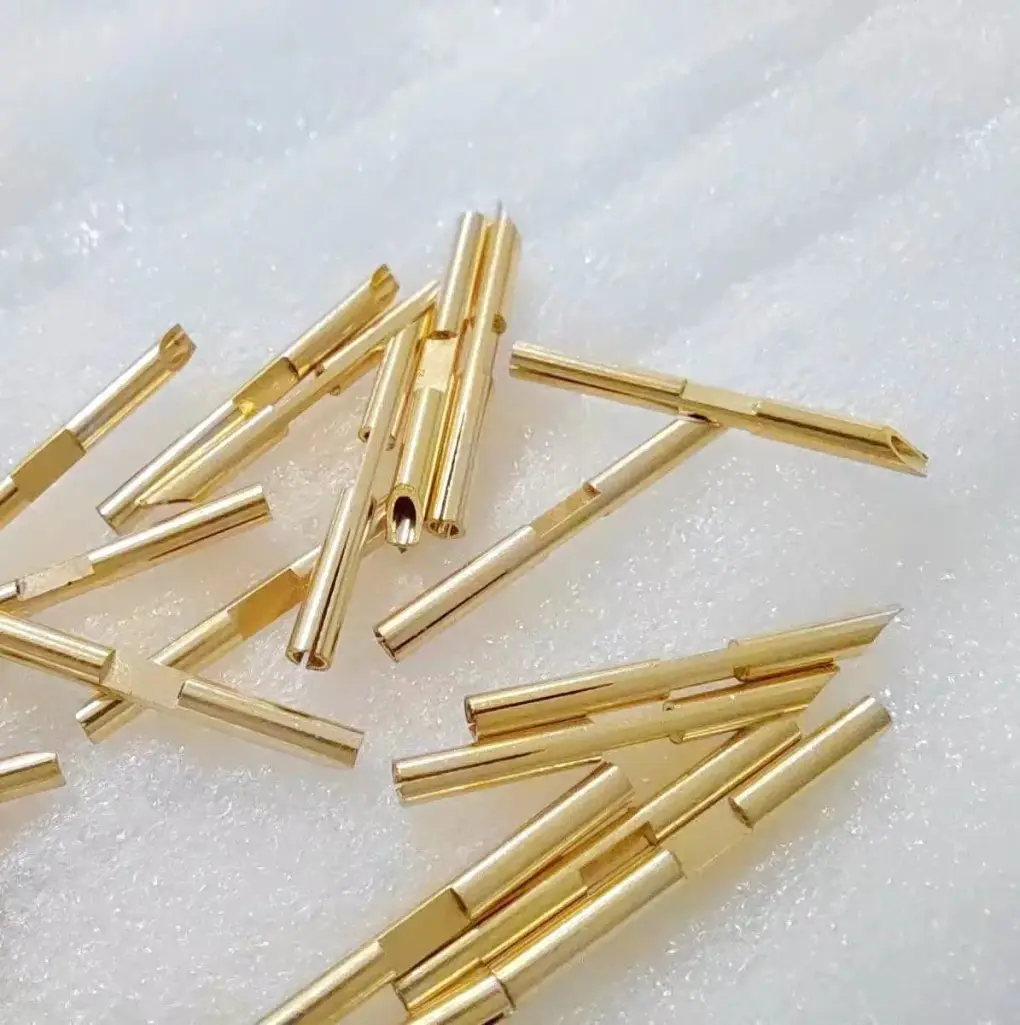
Short answer: Crimped stamped terminals should be quoted with wire size, crimp geometry, and pull-force evidence. The RFQ should define conductor range, insulation diameter, crimp height, barrel design, burr direction, plating, applicator condition, pull-force limit, sample size, cross-section evidence, and whether terminals are supplied loose, on strip, or on reels.
A stamped terminal can be dimensionally acceptable and still fail in harness assembly if the crimp barrel cuts strands, under-compresses the conductor, opens during pull testing, or feeds poorly through the applicator. Pull-force requirements should be discussed before the ịkụ akara and carrier design are frozen.
Use this page with the wire harness stamped terminals guide, terminal and kọntaktị design guide, incoming inspection checklist, and reel-to-reel ịkụ akara guide.
Crimp inspection details before quoting
| Detail | Why it matters | RFQ information |
|---|---|---|
| Wire range | One terminal may not crimp every conductor size reliably. | Wire gauge, strand count, insulation OD, and strip length. |
| Crimp barrel geometry | Wing length, radius, serration, and burr side affect strand damage and grip. | Conductor wing, insulation wing, bellmouth, and cutoff tab. |
| Pull-force limit | Different standards and customers use different minimum values. | Minimum force, test speed, sample count, and failure mode. |
| Evidence type | A pull test alone may miss poor compression or strand cutting. | Crimp height, cross section, photos, and report template. |
Separate terminal ịkụ akara from crimp validation
The ịkụ akara onye na-ebubata may make the terminal, but the final crimp result also depends on wire, applicator setup, crimp height, tooling wear, strip feed, and operator control. The RFQ should be clear about whether the onye na-ebubata is quoting only stamped terminals or also validating crimped samples.
If crimp validation is included, identify the exact wire and machine condition. A sample crimped with substitute wire can prove the terminal shape, but it may not prove the customer harness. If the product also needs electrical acceptance, connect the requirement to the kọntaktị resistance and continuity test guide.
If terminals will be crimped by a different plant, ask for a strip sample that can run through the real applicator before production approval. Also confirm whether plating thickness near the barrel is controlled with the terminal plating thickness inspection guide, because buildup can change the crimp window.
Control burr side, plating, and carrier handling
Burr direction matters in the crimp barrel. A burr toward the strands can cut wire during compression. A burr on the carrier cutoff can interfere with feeding. Plating thickness can also change barrel behavior and connector fit, especially on small terminals.
For terminals supplied on reels, define feed direction, pitch, reel orientation, splice rule, leader length, tail length, and packaging protection. A perfect loose terminal is not enough if the reel stops the applicator. Cleanliness can matter as well, especially when the crimped terminal is later soldered, welded, or tested for low resistance.
RFQ details to include
- Terminal drawing, strip layout if available, material, thickness, temper, plating, and burr direction.
- Wire gauge range, strand count, insulation OD, strip length, conductor material, and connector cavity details.
- Crimp height target, width target, bellmouth, cutoff tab, insulation support, and accepted visual standard.
- Pull-force limit, test speed, sample size, cross-section need, photo evidence, and report format.
- Supply format: loose parts, carrier strip, reel, cut strip, applicator trial samples, or kitted harness parts.
- Annual volume, launch timing, current crimp problem, and whether PPAP-like documentation is required.
How to compare onye na-ebubata answers
A strong answer separates what the stamped part controls from what the harness crimp process controls. Look for comments about barrel geometry, burr direction, plating thickness, reel feed, and sample evidence. A weak answer only says the terminal can be crimped.
Ask how nonconforming pull-force results will be handled. The answer should separate ịkụ akara dimensional issues, applicator setup, wire variation, plating buildup, and handling damage. That makes later troubleshooting much faster.
Zipụ terminal drawings, wire information, pull-force limits, and supply format through the kọntaktị page. If the crimp standard is not final, use the RFQ form to request sample review before the production strip layout is locked.
FAQ
What causes low pull force on crimped terminals?
nkịtị causes include wrong wire size, poor crimp height, weak barrel geometry, damaged strands, burr direction, plating buildup, applicator wear, or poor strip feeding.
Is pull force enough to approve a crimp?
Not always. Pull force should often be paired with crimp height, visual inspection, and cross-section evidence when the harness risk is high.
Should the ịkụ akara onye na-ebubata validate crimped samples?
Only if that scope is included. The RFQ should state whether the onye na-ebubata provides terminals only or also supports crimp trials.
What should be sent for a crimp terminal RFQ?
Zipụ terminal drawings, material, plating, wire size, crimp height, pull-force limit, reel format, sample quantity, and report requirements.