
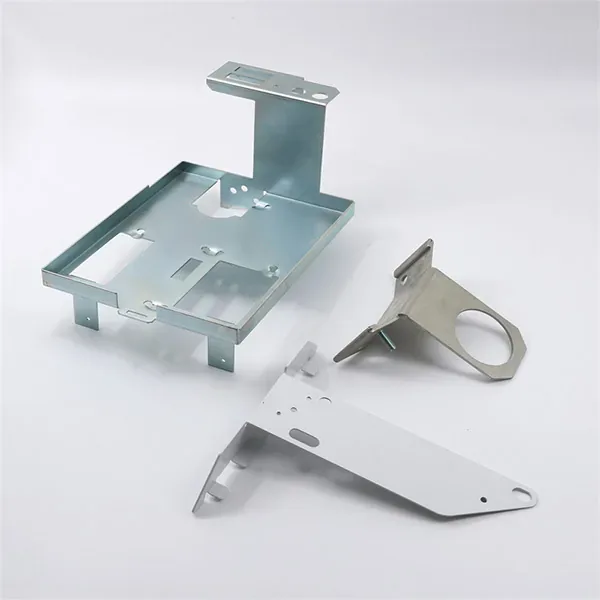
Short answer: Post-stamping heat treatment should be specified when a stamped part needs controlled hardness, spring force, stress relief, wear resistance, or dimensional stability after forming. The RFQ should define material grade, starting temper, target hardness or spring property, heat treatment route, distortion limits, inspection method, and lot traceability.
Some قطعات مهرزنیشده are complete after forming and deburring. Others need heat treatment or stress relief to reach the required spring behavior, hardness, or stability. Spring clips, retaining parts, stainless spring features, beryllium copper contacts, and formed spring steel parts can all change after heating if the process is not controlled.
Heat treatment should not be treated as an afterthought. It can affect flatness, springback, plating, oxide color, burr condition, and dimensional inspection. Use this page with the stainless steel spring clip guide, the beryllium copper spring contact guide, and the مهرزنی فلز springback guide.
When heat treatment matters
| Part need | Why heat treatment may be used | RFQ detail to provide |
|---|---|---|
| Spring force | Formed spring features may need stress relief or age hardening. | Required force, deflection, material grade, and functional test method. |
| Hardness | Wear surfaces, clips, or locking features may need a hardness range. | Target hardness scale, test location, and acceptable range. |
| Dimensional stability | Heat can reduce residual stress but may also distort thin parts. | Flatness, coplanarity, hole position, or functional fit requirements. |
| Conductive spring contact | Copper alloys may need aging to balance conductivity and spring properties. | Base alloy, temper, conductivity need, contact force, and plating sequence. |
| Downstream finish | Heating can affect oxide color, cleaning, passivation, or plating adhesion. | Finish sequence, cosmetic zones, cleaning need, and corrosion requirement. |
Start with material and temper
The same heat treatment requirement can mean different things depending on the starting material. Spring steel, stainless spring material, phosphor bronze, and beryllium copper respond differently. A drawing that states only “heat treat” is not enough. The تأمینکننده needs material grade, thickness, starting temper, target property, and whether the stamped geometry can tolerate distortion.
For copper alloy contacts, review the phosphor bronze and beryllium copper contact guide. For terminals and contacts, connect heat treatment with terminal contact design because spring force, conductivity, plating, and forming sequence are linked.
Control distortion after heating
Heat can relax forming stress, but it can also move thin sections, spring arms, tabs, or flat areas. If the part has tight flatness, coplanarity, or contact height, the inspection plan should include those features after heat treatment, not only after stamping.
Use the flatness and warpage guide and the coplanarity guide when the part must remain stable after heating. If a dimension is critical to assembly, include it in the critical dimensions inspection plan.
Heat treatment and finishing sequence
The sequence matters. Some parts are heat treated before plating. Some are plated after stress relief. Some stainless parts may need cleaning or passivation after heating. If cosmetic appearance matters, oxide color and stain limits should be defined. If soldering or contact resistance matters, surface condition after heat treatment must be considered.
For plated or passivated parts, connect the heat treatment plan with the plating and passivation RFQ guide. For surface appearance, also use the surface finish inspection guide.
RFQ checklist for heat-treated قطعات مهرزنیشده
- Material grade, thickness, starting temper, and material certificate need.
- Target hardness, spring force, deflection, conductivity, or stress relief goal.
- Heat treatment specification, if already defined by the buyer.
- Critical dimensions to inspect after heat treatment.
- Flatness, coplanarity, spring height, or functional fit requirements.
- Finish sequence: heat treat before or after plating, passivation, or cleaning.
- Hardness test location, sample size, report format, and lot traceability.
- Known failure history: weak spring force, cracking, discoloration, distortion, or brittle parts.
When to ask for samples
Ask for samples when the part has spring function, tight dimensional control, visible surfaces, or a new material/process combination. A flat coupon hardness result does not always prove the formed stamped part will meet function. The sample should be checked for hardness and for the dimensions that matter in the assembly.
For a heat treatment review, send the drawing, material, target property, finish sequence, and sample requirement through the contact page. For a new quote, use the RFQ form and include any hardness report, spring force test, or failed sample history.
FAQ: heat treatment for قطعات مهرزنیشده
Why heat treat a stamped part after forming?
Post-stamping heat treatment may be used to reach hardness, spring force, stress relief, wear resistance, or dimensional stability that the as-stamped part cannot provide.
Can heat treatment distort قطعات مهرزنیشده?
Yes. Thin sections, spring arms, tabs, and flat areas can move during heating, so critical dimensions should be checked after heat treatment.
What should be specified for hardness control?
Specify material, starting temper, target hardness range, hardness scale, test location, sample size, heat treatment batch, and report requirement.
Should plating happen before or after heat treatment?
It depends on material, finish, temperature, appearance, and function. The sequence should be agreed before quoting because it affects cost, risk, and inspection.