
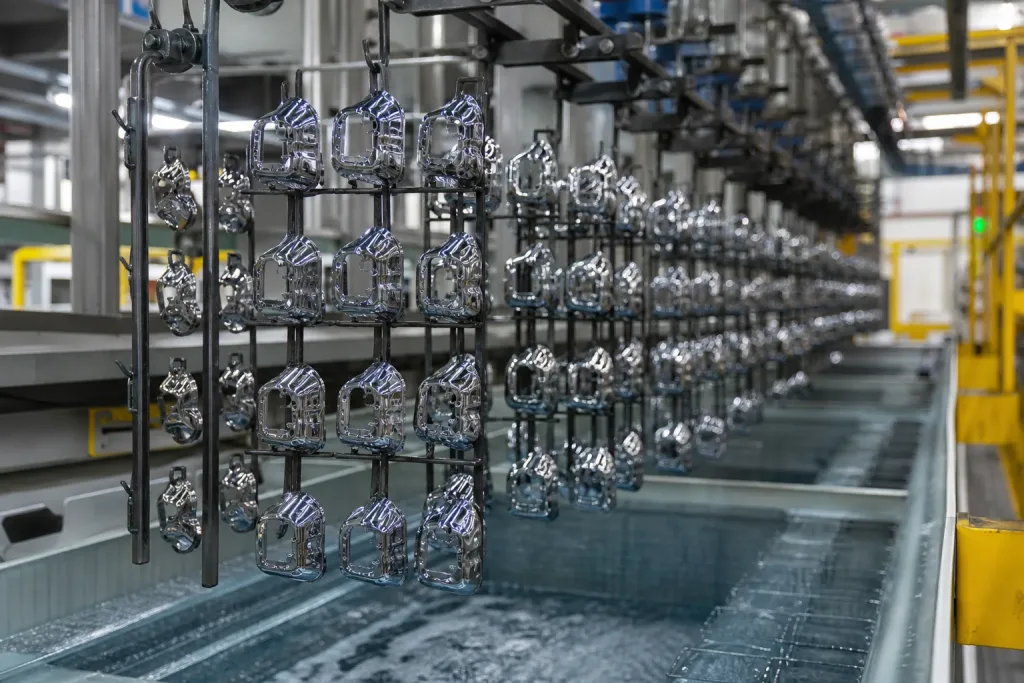
Short answer: metala stampado sub-tier provizanto management should show which outside processors touch the part, what requirements they receive, how their lots remain linked to the stamped lot, which approvals apply, and how changes or nonconforming work are controlled. The stampado provizanto remains the buyer’s production kontakto unless the contract states otherwise. A processor name or certificate alone does not prove that the correct part revision and process were used.
Many stampitaj partoj leave the press before they are finished. They may be plated, heat treated, cleaned, passivated, coated, deburred, welded, tested, packed, or labeled by another company. The buyer does not need to manage every processor directly, but the sourcing package should make the control path visible.
Use the secondary operations guide to identify possible outside steps. Use this page to decide what evidence must follow the work through those steps.
Build a part-specific sub-tier process map
Start with the released drawing and list every operation from incoming coil through shipment. For each outside process, record the processor, site, operation, specification revision, material or part condition received, tooling or rack needs, inspection, certificate, lot identity, packaging, transport loop, and approval status. Mark alternates separately. An alternate that exists in a purchasing database may still need part-specific review.
| Outside process | Control questions | Evidence to connect to the shipped lot |
|---|---|---|
| Plating or passivation | Which finish, thickness zones, masking, appearance, adhesion, corrosion, solderability, or kontakto requirements apply? | Purchase specification, processor lot, report, approved sample, and packaging condition. |
| Heat treatment | Which material condition, hardness, atmosphere, distortion, embrittlement, or post-process test matters? | Batch identity, process record, hardness or test result, and dimensional release. |
| Cleaning or deburring | Which residues, edge condition, particle, oil, stain, or no-touch surface limits apply? | Method, bath or media control, inspection result, and protected return packaging. |
| Welding or hardware insertion | Which location, orientation, strength, appearance, destructive-test, or fixture controls apply? | Setup approval, test result, fixture identity, lot record, and first-off evidence. |
| Testing, sorting, or packaging | Which acceptance criteria, sample size, equipment, label, orientation, and lot-separation rules apply? | Work instruction, result file, quantity reconciliation, label copy, and release record. |
Flow down the requirement that actually controls the part
A purchase order that says “plate per drawing” may not be enough. The sub-tier package should identify the active drawing and specification revisions, controlled surfaces, rack or barrel restrictions, masking, appearance zones, test methods, report content, packaging, and what requires approval. The stampado provizanto should confirm that translated or reformatted instructions do not change the technical requirement.
For finish planning, compare the package with the plating and passivation RFQ guide. For hardened parts, use the post-stampado heat-treatment guide. Cleaning-sensitive projects should also reference the cleanliness and contamination guide.
Keep material, production, processor, and shipment lots linked
The traceability chain should show which material coil became which stamped lot, which quantity went to each processor lot, what was returned, what was rejected or reworked, and which finished quantity shipped. Repacking, split lots, partial processing, and mixed return containers are common points where identity becomes weak.
Ask how certificates and test reports are checked before shipment. The part number, revision, material, finish, processor lot, quantity, date, and result should agree with the physical labels and packing records. Use the lot traceability guide and the packing-list and certificate release guide to define the final link.
Separate processor approval from process-change approval
A processor may be approved for one finish, material, site, or customer program and not another. Record who approves the source and which evidence is needed. If the processor, site, chemistry, furnace route, cleaning method, rack, test laboratory, or packaging method changes, follow the agreed notification rule before shipment when required.
The stampado provizanto should not treat urgent availability as automatic permission to switch. The response may require samples, dimensional checks, finish tests, functional tests, old/new lot separation, revised labels, or customer approval. The provizanto process-change notification guide provides a useful structure.
Control nonconforming work across company boundaries
When an outside process fails, first contain the affected material and reconcile quantity. Identify what remains at the stamper, processor, warehouse, in transit, and at the buyer. Preserve samples and records before stripping, replating, reheat treatment, resorting, or repacking changes the evidence.
The corrective action should distinguish stampado causes from processor causes and interface causes. A plating skip may start with oil or burrs from stampado, poor cleaning at the processor, rack kontakto, or packaging after plating. Assign actions from evidence rather than sending the complaint to whichever company handled the final visible process. Link the response to the provizanto corrective-action evidence guide.
Recenzo capacity and continuity beyond the press
A stampado line can be available while the approved plater, heat treater, test laboratory, or packaging source is full or offline. Ask for normal and peak routing, transport time, minimum batch, queue assumptions, alternate-source status, required fixtures or racks, and recovery approval steps. Do not count an unapproved alternate as ready capacity.
For critical programs, include sub-tier dependencies in the business continuity and recovery plan. The useful answer identifies what can continue, what needs approval, how much inventory covers the gap, and when conforming finished parts can reach the buyer.
Prepare a sub-tier control RFQ
Use the kontakto page to send the drawing, material, finish, outside-process specifications, annual and release quantity, target delivery, required certificates or tests, approved-source rules, traceability, packaging, and change-notification requirements. Identify which requirements come from the end customer and which are buyer preferences.
For an active quote, use the RFQ form and ask the stampado provizanto to name the planned outside processes, what is included in price, what remains conditional, how lots are linked, and what evidence will ship. Add the quality agreement checklist when responsibilities need to be written before production.
Oftaj Demandoj
What is a sub-tier provizanto in metala stampado?
It is an outside company that performs part of the supplied scope, such as plating, heat treatment, cleaning, welding, testing, sorting, coating, or packaging.
Should buyers approve every outside processor?
Not always. The contract, drawing, customer rules, process risk, and quality agreement determine whether the buyer approves a processor, receives notice, or relies on provizanto control.
What evidence should link a processor to a shipment?
Link the stamped lot, processor lot, active specification, quantity, certificate or test result, rework or rejection history, finished labels, and packing record.
Can a stampado provizanto change plating or heat-treatment sources?
Only within the agreed source and change-control rules. Higher-risk changes may require notice, samples, reports, validation, lot separation, or buyer and customer approval before shipment.