
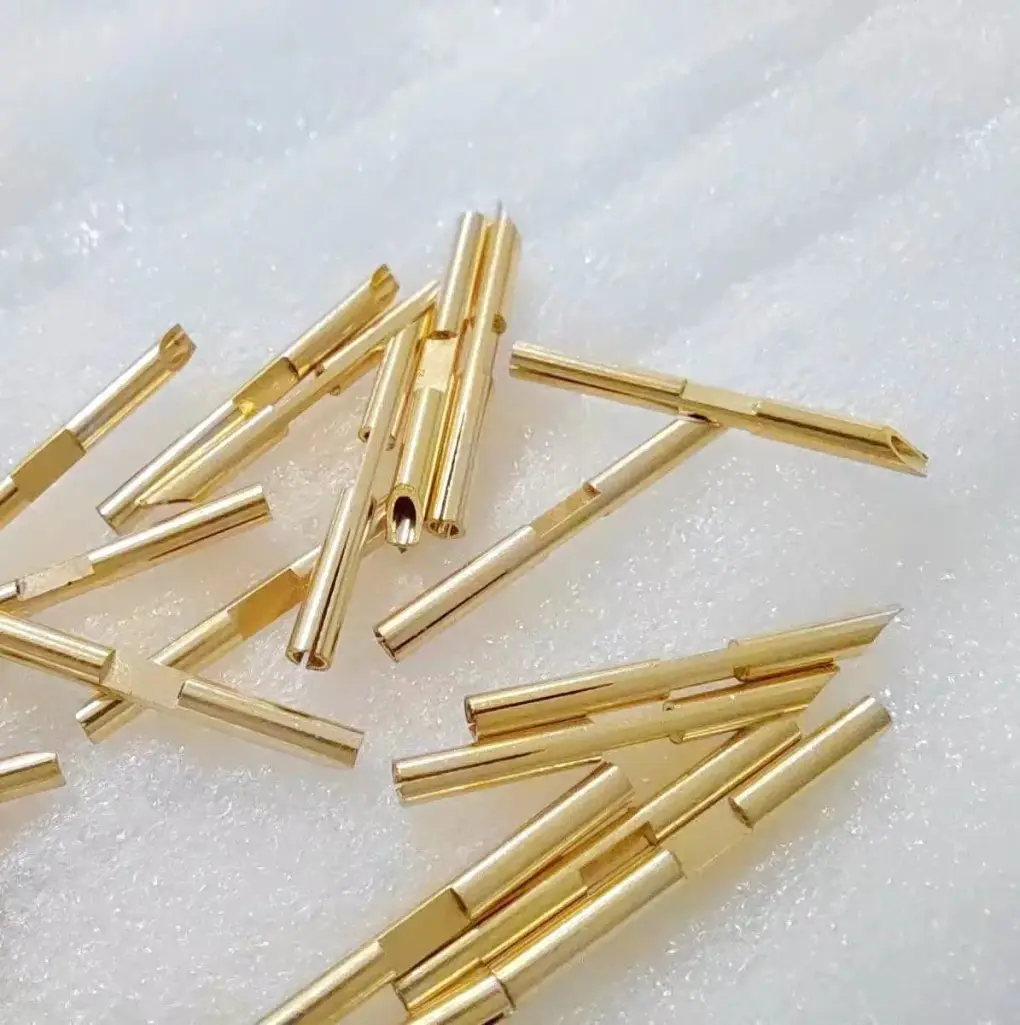
Short answer: Tin whisker risk should be discussed before selecting tin-plated stamped terminals, kontakto springs, solder tabs, or lead frames for electronics. The RFQ should define the plated area, tin type, underplate, forming strain, storage condition, soldering exposure, inspection evidence, packaging, and whether the buyer has a customer-specific whisker mitigation requirement.
Tin whiskers are not a normal burr or cosmetic stain. They are tiny metallic growths that can create electrical shorts when tin-plated stampitaj partoj sit in sensitive electronic assemblies. The risk depends on plating chemistry, stress, base material, underplate, forming, storage, and the environment around the final product.
Use this page with the copper terminal plating selection guide, pre-plated versus post-plated terminals guide, selective plating stamped terminals guide, and terminal solderability test guide.
Tin whisker questions before quoting
| Question | Why it matters | RFQ detail |
|---|---|---|
| Tin finish | Bright tin, matte tin, reflowed tin, and tin alloy finishes do not carry the same risk profile. | Finish callout, underplate, thickness range, and approved alternatives. |
| Stress state | Forming, bending, staking, press-fit, and residual stress can affect whisker behavior. | Formed areas, kontakto springs, crimp zones, and post-plating forming status. |
| Assembly risk | A low-voltage consumer part and a high-reliability control module may need different controls. | End use, spacing, voltage, life requirement, and customer standard. |
| Evidence | A simple plating thickness report does not prove whisker control. | Plating records, finish approval, aging condition, visual evidence, and storage plan. |
Separate solderability from whisker risk
Tin is often selected because it solders well and can be economical for stamped contacts. That does not automatically make it acceptable for every electronic assembly. A solderability requirement checks wetting behavior; a whisker review asks whether the surface, stress, and storage condition could create conductive growth over time.
If the part has both solderable tabs and kontakto surfaces, mark the zones separately. The solderable area may need tin, while the mating kontakto, spring area, or no-touch surface may need a different finish or a nickel underplate. Connect the drawing review to the terminal plating thickness inspection guide and the kontakto resistance and continuity test guide.
Recenzo forming sequence and storage
A stamped strip can be plated before forming, after forming, or selectively plated in zones. Each route changes where stress sits in the finish. If a bend, lance, tab, or kontakto beam is formed after plating, the RFQ should say whether exposed base metal, cracks, or stressed tin on the bend is acceptable.
Storage and packaging should not be treated as clerical details. Humidity, abrasion, mixed materials, sulfur exposure, and long shelf life can change how a plated terminal reaches the assembly line. For sensitive electronics, review packaging with the ESD-safe packaging guide and cleanliness with the cleanliness control guide.
RFQ details to include
- Drawing and model with tin-plated zones, kontakto zones, solder zones, bend areas, carrier tabs, and no-touch surfaces.
- Base material, thickness, temper, copper alloy or steel grade, underplate, tin type, plating thickness, and approved finish alternatives.
- Forming sequence: pre-plated strip, post-plated part, selective plating, post-form heat exposure, or soldering process.
- Customer requirement for whisker mitigation, aging evidence, inspection method, photos, certificate format, and sample quantity.
- Packaging method, shelf-life expectation, humidity control, reel or tray format, and handling limits.
- Annual volume, prototype need, current field issue if any, and target launch timing.
How to compare provizanto answers
A useful provizanto answer names the finish route and the risk controls. It should not only say that tin plating is available. Look for comments about underplate, matte or bright tin selection, formed zones, storage, and whether the provizanto needs the buyer’s customer standard before confirming the finish.
If the buyer has no firm finish requirement, ask for options. Nickel, tin, silver, selective plating, or a different kontakto-zone stack may be more appropriate depending on soldering, conductivity, friction, corrosion, and reliability risk.
Sendu drawings, finish notes, end-use risk, soldering process, and any customer plating standard through the kontakto page. If the finish is still open, use the RFQ form to request a plating review before tooling and strip layout are fixed.
Oftaj Demandoj
What are tin whiskers on stamped terminals?
They are small metallic growths that can form on tin-plated surfaces and may create electrical shorts in sensitive electronic assemblies.
Is tin plating always unsafe for terminals?
No. Tin is widely used, but the finish route, underplate, forming stress, storage, spacing, and reliability requirement should be reviewed.
Can solderability testing prove low whisker risk?
No. Solderability checks wetting behavior. Whisker risk needs finish selection, process records, stress review, storage control, or customer-specific evidence.
What should be sent for a tin whisker RFQ review?
Sendu drawings, material, tin finish, underplate, plated zones, forming sequence, end-use risk, storage requirement, sample plan, and report needs.