
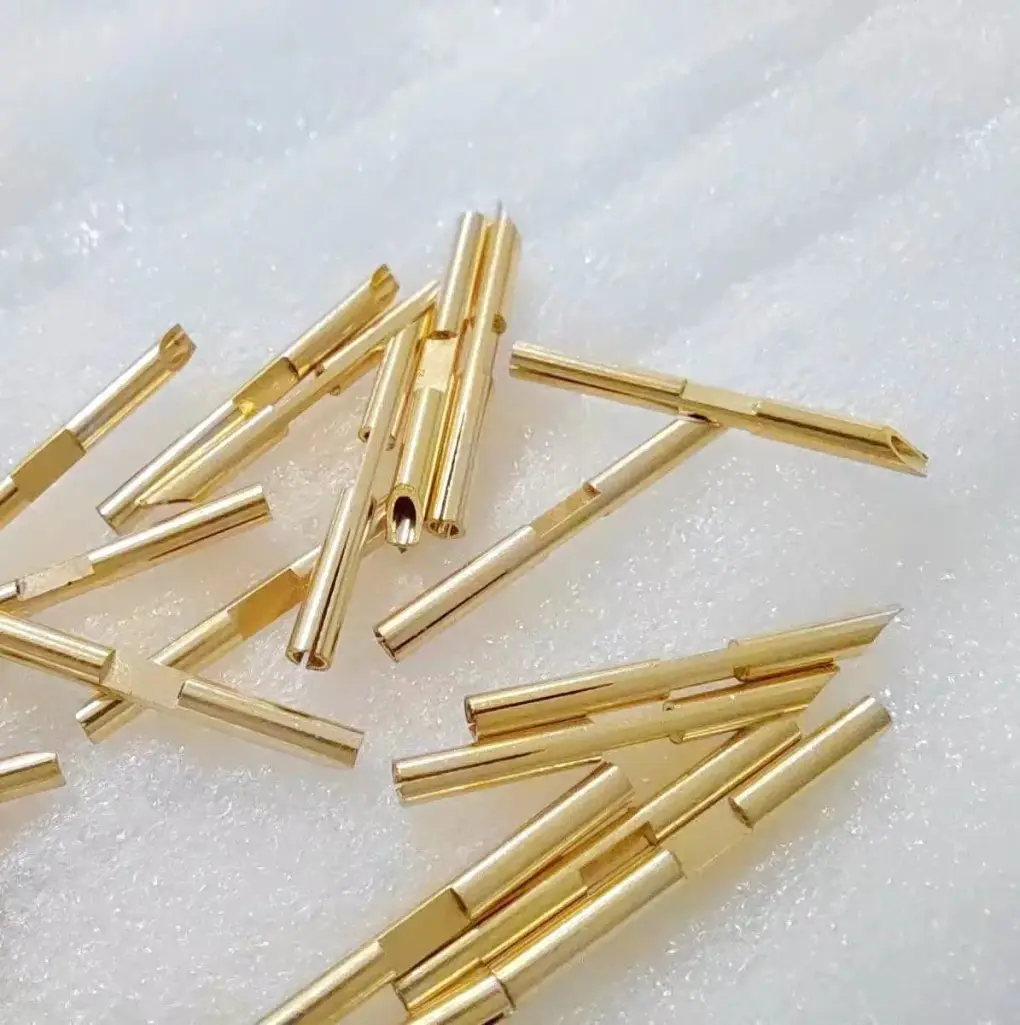
Short answer: Terminal and kontak paghulma design should define material grade, thickness, spring function, kontak area, plating, burr direction, grain direction, critical tolerances, carrier requirements, and inspection method. Small changes in bend radius, tab geometry, plating thickness, or burr location can affect kontak force, electrical performance, assembly reliability, and tooling cost.
This guide is for engineers and buyers sourcing stamped terminals, contacts, spring clips, connector parts, and small conductive components. These parts are often small, but they are not simple. Electrical and mechanical behavior must be considered together.
Ipadala drawings through the RFQ form when you need a quote. Include material, finish, tolerance, annual volume, and mating part details where available.
What matters in terminal and kontak paghulma?
| Design area | Why it matters | RFQ detail |
|---|---|---|
| Materyal | Controls conductivity, spring behavior, strength, and forming risk. | Copper alloy, brass, bronze, stainless, temper, and thickness. |
| kontak zone | Affects resistance, wear, plating, and mating reliability. | Mark kontak surfaces and required finish. |
| Spring features | Formed beams and tabs must hold force after repeated use. | Spring function, deflection, and critical formed dimensions. |
| Burr direction | Burrs can damage mating parts or affect electrical kontak. | Preferred burr side and maximum burr height. |
| Carrier and packaging | Terminals may be supplied loose, on strip, on reel, or in trays. | Assembly process and packaging requirement. |
Materyal selection
Terminal and kontak parts often use copper alloys, brass, phosphor bronze, beryllium copper, stainless steel, or customer-specified materials. The choice depends on conductivity, spring force, corrosion resistance, fatigue, plating, and cost.
When requesting a quote, include the exact material standard and temper if known. If the material is open, explain the electrical and mechanical requirements so the tagasuplay can suggest options during DFM review.
Related pages: terminal and kontak paghulma, copper paghulma, and brass paghulma.
kontak area and plating
The kontak zone should be clearly marked. It may need tin, nickel, silver, gold, or another finish depending on current, mating cycles, corrosion risk, solderability, and customer standard. Plating can also change dimensions and kontak behavior, so it should be included in the quote scope.
For selective plating or precious metal plating, the RFQ should identify plated zones, thickness, masking, and inspection requirements. If the part will be crimped, soldered, welded, or press-fit, note that connection method as well.
Spring force and formed features
Many terminals and contacts rely on a formed beam, tab, lance, or spring feature. Materyal temper, grain direction, bend radius, and forming sequence can affect spring force and durability.
- Mark the formed feature that controls kontak pressure.
- Provide target deflection or spring force if it is controlled.
- Identify any fatigue, insertion, or mating-cycle requirement.
- Pagrepaso bend radius and grain direction for cracking risk.
- State whether samples need force testing or functional checks.
Tolerances and burr control
Small terminals often have tight pitch, hole, slot, and formed-height requirements. Still, every dimension should not be over-toleranced. Focus tight control on the features that affect mating, electrical kontak, assembly, or automated feeding.
Burr direction matters because it can affect mating surfaces, insulation, operator handling, and plating coverage. If burrs are critical, include maximum burr height and preferred burr side in the drawing.
progresibong hulmahan and strip layout
High-volume terminals and contacts are often made with progressive dies. Strip layout controls feeding, pilots, carrier strength, part orientation, scrap rate, and downstream packaging. If parts need to remain on strip for automated assembly, the carrier design should be discussed early.
For cost planning, see progresibong hulmahan paghulma cost and metal kagamitan sa paghulma cost guide.
Komon failure modes to review before tooling
Terminal and kontak problems are often found after assembly, not during the first visual check. A design review should consider how the stamped part behaves when it is plated, inserted, mated, loaded, and cycled.
- Low kontak force: may come from material temper, beam geometry, bend radius, or springback.
- High kontak resistance: may come from plating choice, kontak area, contamination, or insufficient pressure.
- Cracking at bends: may come from tight radius, wrong grain direction, hard temper, or aggressive forming.
- Burr interference: may scratch mating parts, cut insulation, or change insertion feel.
- Feeding problems: may come from weak carrier design, poor strip balance, or packaging mismatch.
- Plating variation: may affect solderability, kontak resistance, or final thickness at critical zones.
- Handling damage: may occur if loose parts are packed in bulk when trays, reels, or carrier strip are needed.
These risks should be discussed before the progresibong hulmahan layout is finalized. Once carrier position, feed direction, and forming sequence are fixed, late changes can be expensive.
Inspection and functional testing
Dimensional inspection may not be enough for a terminal or kontak. Depending on the application, the tagasuplay may need to support plating checks, insertion checks, spring-force measurement, kontak-zone inspection, or customer-specific sampling.
- First article inspection.
- Critical dimension report.
- Plating thickness or finish report.
- Burr and edge inspection.
- Spring-force or functional test if specified.
- Materyal certificate and lot traceability.
RFQ checklist for terminals and contacts
- 2D drawing and 3D file, if available.
- Materyal nga grado, temper, and thickness.
- kontak surface, plating, solderability, or conductivity requirement.
- Spring feature, bend radius, grain direction, and formed dimensions.
- Burr direction, maximum burr height, and edge condition.
- Carrier strip, reel, tray, or bulk packaging requirement.
- Prototype quantity, annual volume, and project life.
- Inspection documents and functional tests.
FAQ
What materials are used for stamped terminals and contacts?
Copper alloys, brass, phosphor bronze, beryllium copper, stainless steel, and customer-specified alloys may be used. The choice depends on conductivity, spring force, corrosion, fatigue, plating, and cost.
Why is burr direction important for terminals?
Burrs can affect mating surfaces, insulation, insertion, plating coverage, and handling. The drawing should mark the preferred burr side when the edge is functional.
Can terminals be supplied on strip or reel?
Yes. Many terminals are kept on carrier strip or supplied on reels for automated assembly. Carrier requirements should be discussed before progresibong hulmahan design.
Does plating affect terminal design?
Yes. Plating affects kontak performance, corrosion resistance, solderability, dimensions, and cost. Selective plating requires clear zone definition and inspection requirements.
When is spring force testing needed?
Spring force testing is useful when the formed feature controls kontak pressure, retention, or repeated mating performance. The required test method should be defined by the customer or design team.
What information helps quote terminal paghulma faster?
Ipadala drawings, material, thickness, plating, critical tolerances, spring function, burr direction, carrier requirement, annual volume, and inspection needs.
Request a terminal or kontak paghulma review
For stamped terminals, contacts, clips, spring connectors, shields, and small conductive components, send drawings through the RFQ form. Include material, thickness, plating, kontak area, burr direction, carrier requirement, and annual volume so tooling and inspection can be reviewed early.