
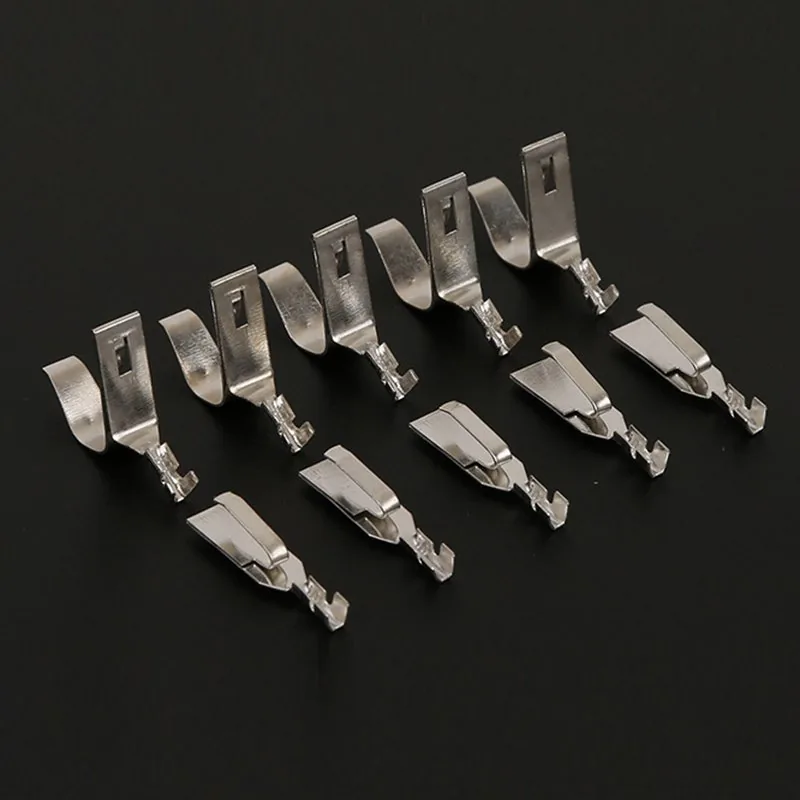
Short answer: stainless steel spring clips are stamped and formed parts where grade, temper, thickness, bend radius, and free height control spring force more than the outline alone. A useful RFQ should define the stainless condition, working deflection, target force, burr direction, passivation or cleaning, inspection method, quantity, and የመላኪያ ጊዜ.
This guide is for engineers and sourcing teams buying stainless spring clips, retaining clips, battery clips, snap-in clips, small stamped clips, and corrosion-resistant spring components. The main question is whether the clip can keep enough force after forming, assembly, repeated deflection, and exposure to the expected environment.
For a quote, send flat and formed drawings, stainless grade and temper, thickness, target force, contact area, finish, inspection plan, quantity, and schedule through the RFQ form. For broader clip design notes, review the stamped metal clips and spring clips guide.
Stainless grade, temper, and spring behavior
Stainless grade selection should be tied to corrosion exposure, forming severity, and required spring force. Temper matters because a hard spring temper can improve force retention but reduce formability, especially near tight bends, lances, and small tabs. If the part is replacing carbon steel, brass, or phosphor bronze, note the reason for switching to stainless because spring force, conductivity, forming load, and finish options may change.
| Stainless option | Often used when | RFQ note |
|---|---|---|
| 301 spring temper | Higher spring force and good fatigue resistance are needed. | Confirm bend radius, grain direction, and crack risk. |
| 304 | General corrosion resistance and formability are priorities. | Review force target if the clip needs strong spring recovery. |
| 316 | Chloride or outdoor corrosion exposure is expected. | Check force, cost, and availability against the service environment. |
| 17-7 PH | High strength and controlled heat treatment are required. | Define condition, heat treatment, and inspection requirements. |
Springback, force retention, and formed geometry
Stainless steels typically spring back more than mild steel. The amount depends on grade, temper, thickness, bend radius, formed height, and feature spacing. Tooling normally compensates for this, but prototype and first article checks are important when free height, working deflection, and contact force are critical.
- Define the working deflection and force target at that deflection.
- Show any over-travel condition or assembly stop that limits permanent set.
- Call out inside bend radius instead of leaving tight bends to interpretation.
- Identify formed fingers, lances, hooks, and contact points as critical features.
- Confirm whether the clip must retain force after heat, vibration, or repeated cycling.
For battery clips, stainless may be chosen for mechanical retention and corrosion resistance, but electrical performance should be reviewed. If low contact resistance is critical, the buyer should state current path, contact area, and any plating or coating requirement. The የብረት ማህተም springback guide is useful when formed height or force consistency is a quote driver.
Thickness, burr direction, and edge condition
Material thickness has a strong effect on spring force, so both nominal thickness and strip tolerance matter. Small changes can affect insertion force or retention force, especially on narrow spring arms. Burr direction should be stated on clips that touch plastic housings, battery cells, mating tabs, wires, seals, or plated surfaces.
- Place burrs away from cosmetic, sliding, or electrical contact surfaces where possible.
- Specify deburring or tumbling if sharp edges could damage mating parts.
- Review small slots and pierced holes near bends because distortion can occur during forming.
- Confirm edge cleanliness before passivation if corrosion resistance is important.
Tooling and tolerance planning
Prototype clips may be made with simpler tooling, laser-cut blanks, or stage tooling, depending on geometry. Repeat production often moves to compound or progressive dies when quantity, consistency, and unit cost justify tooling. Progressive tooling is especially useful when piercing, forming, coining, and cutoff must stay controlled over long runs.
| Feature | Why it affects the quote |
|---|---|
| Free height and formed angle | Usually require springback compensation and inspection fixtures. |
| Hole-to-bend distance | Can distort during forming if spacing is too tight. |
| Contact force | Needs a defined test position, fixture, and acceptance range. |
| Tight cosmetic edges | May require controlled burr direction, deburring, or secondary finishing. |
Use the የብረት ማህተም tolerances guide when deciding which dimensions are truly critical. For stainless material and corrosion considerations, see the stainless steel stamping parts guide.
Corrosion, cleaning, and passivation
Stainless corrosion resistance depends on grade, surface condition, and contamination control. Passivation can help remove free iron from the surface, but it does not repair poor grade selection, deep scratches, trapped media, or designs that hold corrosive residue. If a standard is required, such as ASTM A967 or a customer-specific passivation process, include it in the RFQ.
For visible or contact surfaces, state whether the finish should be bright, matte, tumbled, cleaned, passivated, plated, or supplied oil-free. Plating stainless may require added process steps, so quote data should make the electrical, cosmetic, or soldering reason clear. For finish planning, use the plating and passivation RFQ guide.
RFQ checklist for stainless spring clip stampings
- 2D drawing and 3D CAD model showing flat and formed views.
- Stainless grade and temper, including any approved alternates.
- Material thickness and thickness tolerance if force is critical.
- Target spring force, test deflection, working position, and cycle requirement.
- Inside bend radius, formed height, free angle, and critical contact locations.
- Burr direction and any edge break, deburring, or tumbling requirement.
- Finish, cleaning, passivation, plating, or packaging requirement.
- Prototype quantity, production quantity, annual volume, and expected releases.
- Inspection requirements such as first article, force testing, gauges, CMM, material certificate, or PPAP-like documents.
- Target የመላኪያ ጊዜ, project stage, revision level, and current አቅራቢ issue if there is one.
For spring clips, inspection often needs more than a caliper check. A practical control plan may include material certificate review, thickness checks, formed-height gauges, spring-force fixtures, visual burr inspection, and passivation confirmation. Send drawings and specifications through the contact page, or review available manufacturing categories on products and services.
FAQ: stainless steel spring clip stamping
Which stainless steel is best for spring clips?
It depends on force, corrosion exposure, and forming severity. 301 spring temper is often used for higher spring force, 304 for general corrosion resistance and formability, 316 for stronger chloride resistance, and 17-7 PH when high strength and heat treatment control are required.
Why does stainless springback matter in clip stamping?
Springback changes the final angle, free height, and contact position after forming. Because stainless often springs back more than mild steel, tooling may need compensation, and first article parts should be checked against force and deflection requirements.
Should stainless spring clips be passivated?
Passivation is often specified when corrosion resistance and surface cleanliness matter. The need depends on grade, exposure, edge condition, customer standard, and whether the parts go through deburring or other secondary operations.
What data is needed to quote a stainless battery clip?
Send the drawing, stainless grade and temper, thickness, target force, contact area, burr direction, finish or passivation requirement, inspection plan, quantity, and የመላኪያ ጊዜ. If the clip carries current, include electrical and plating requirements.