
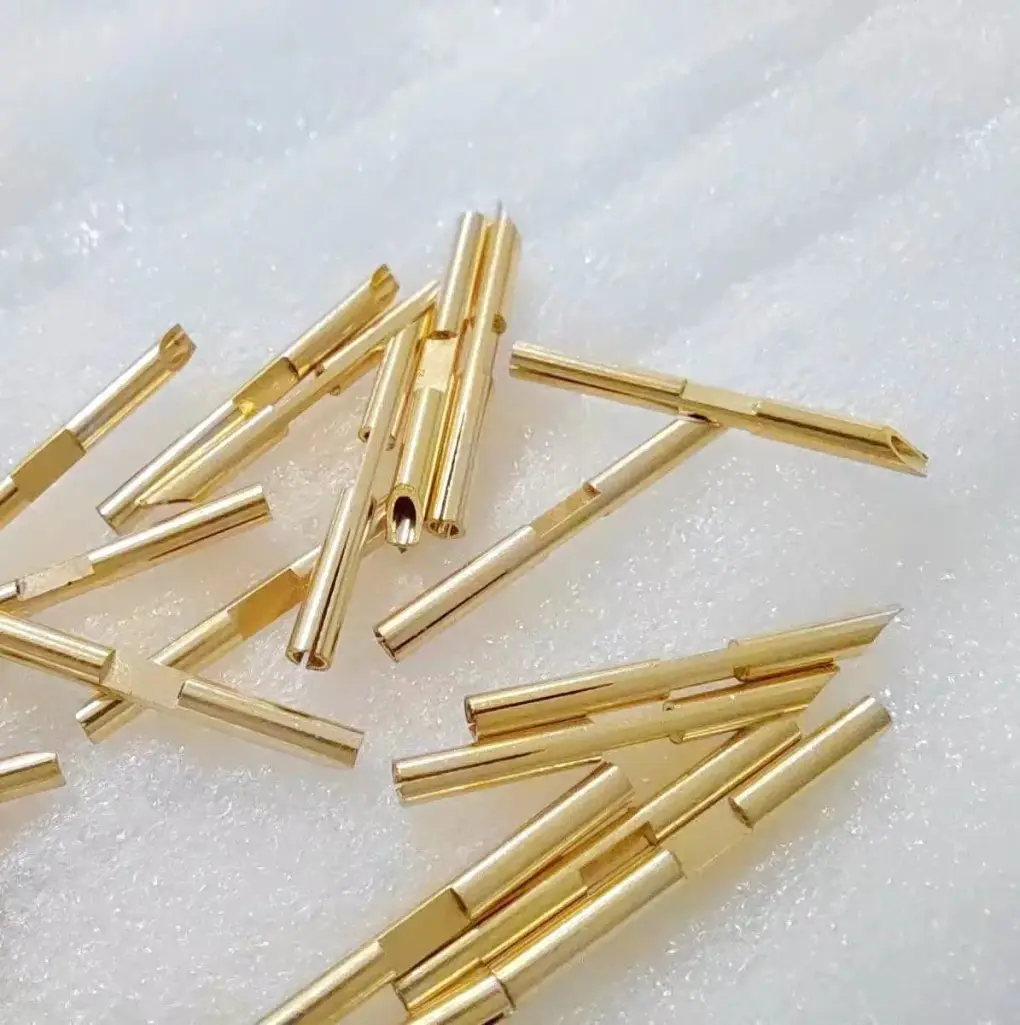
Short answer: reel-to-reel stamping is used when contacts, lead frames, terminals, springs, or small precision parts must stay on carrier strip for high-volume stamping, plating, inspection, or automated assembly. RFQs should define strip layout, reel direction, material, plating, burr direction, pitch, packaging, and downstream equipment needs.
This guide is for electronics, connector, sensor, battery, telecom, and device buyers who need strip-fed የተማተሙ ክፍሎች rather than loose pieces. Reel-to-reel stamping can reduce handling and support automation, but only when the carrier strip and packaging are treated as part of the product.
If your part needs reel or carrier strip supply, send the drawing, strip format, material, plating, annual volume, and assembly equipment notes through the RFQ form. For the core quote package, use the የብረት ማህተም RFQ checklist.
What is reel-to-reel stamping?
Reel-to-reel stamping feeds metal strip through a die, keeps the part connected to a carrier, and winds or packs the strip for later processing. It is often used for terminals, contacts, lead frames, spring contacts, clips, battery tabs, and small precision electronics parts. The part may then go to plating, molding, insertion, soldering, or automated assembly.
The strip format matters as much as the stamped geometry. Pitch, carrier holes, feed direction, cutoff points, reel size, and packaging affect whether the parts run smoothly in downstream equipment.
Common reel-to-reel የተማተሙ ክፍሎች
| Part family | Why reel supply is used | RFQ concern |
|---|---|---|
| Connector terminals | Automated insertion, plating, and consistent orientation. | Pitch, carrier, plating area, burr direction. |
| Lead frames | High-density strip processing and molding compatibility. | Coplanarity, strip layout, cleanliness, packaging. |
| Spring contacts | Repeatable forming and controlled handling. | Spring height, force, material temper, fatigue risk. |
| Battery tabs or strips | Volume production and controlled feed to assembly. | Conductivity, plating, burrs, insulation clearance. |
| Stamped inserts | Automated loading into molding or assembly process. | Locating features, strip retention, feed direction. |
Strip layout and carrier design
Carrier design should be discussed before tooling. Pilot hole size, pitch, part orientation, tie bars, scrap bridges, cutoff tabs, strip width, and reel direction can affect both stamping and downstream use. If the buyer already has assembly equipment, send the feed requirements and reel specifications with the RFQ.
For parts that will be molded or overmolded, connect reel design to the stamped insert guide. For lead frames, also review the lead frame stamping guide.
Material, plating, and reel handling
Reel-to-reel parts often use copper alloys, brass, phosphor bronze, beryllium copper, stainless steel, or plated strip. Plating may be selective or full coverage depending on contact zones, solderability, corrosion, and cost. Reel handling can scratch or bend parts if strip tension, separators, and packaging are not controlled.
Use the plating and passivation RFQ guide and copper alloy contact stamping guide when the part has conductivity, solderability, or spring requirements.
Burr direction and contact surfaces
Burr direction matters because reel-to-reel parts are often contacts or inserts. Burrs can affect automated insertion, plating wear, molding, soldering, or electrical contact. The drawing should define contact surfaces, plastic-contact edges, and edges that must not scrape or cut.
For contact and insert parts, review the burr control guide. If burr side matters only in certain zones, mark those zones instead of applying an unrealistic tight burr requirement to every edge.
Inspection during reel-to-reel production
Inspection may include strip pitch, carrier hole position, part geometry, bend height, spring height, burrs, plating condition, coplanarity, camera checks, sample dimensional reports, and reel packaging review. For high-volume parts, in-process checks are often more important than sorting at the end.
Use the FAI checklist for sample approval and the PPAP/APQP guide for controlled programs.
Packaging and reel specifications
Reel packaging should protect part shape, plating, orientation, and cleanliness. Define reel diameter, strip direction, leader/trailer length, quantity per reel, label requirements, moisture protection, and whether interleaf paper or separators are needed. If loose parts are cut after stamping, define counted bags, trays, or tubes.
For export packing, use the packaging and shipping guide. Small strip parts can be damaged or mixed if packaging is not controlled.
RFQ checklist for reel-to-reel stamping
- 2D drawing, 3D model, and current revision.
- Strip layout requirement, pitch, carrier holes, feed direction, reel direction.
- Material grade, temper, thickness, conductivity, and approved substitutes.
- Plating type, selective plating zones, solderability, contact surfaces.
- Burr direction, coplanarity, spring height, pitch, and critical dimensions.
- Downstream process: plating, molding, insertion, soldering, welding, or automated assembly.
- Reel diameter, quantity per reel, labels, leader/trailer, packaging and moisture protection.
- Prototype, pilot, annual volume, inspection documents, and launch timing.
How to compare reel-to-reel quotes
Compare more than unit price. Ask whether the quote includes tooling, strip layout design, plating coordination, sample reels, inspection, packaging, labels, and any carrier scrap assumptions. A cheap quote that ignores carrier design can cause trouble in automated assembly.
For a reel-to-reel RFQ, send the part drawing and downstream equipment needs through the RFQ form. Include any approved reel format, pitch, and packaging standard if your assembly line already uses one.
FAQ: reel-to-reel stamping
What parts are good candidates for reel-to-reel stamping?
Contacts, terminals, lead frames, spring contacts, battery tabs, and small precision electronics parts are common candidates.
Why keep parts on carrier strip?
Carrier strip supports feeding, plating, inspection, orientation, and automated assembly while reducing loose-part handling.
Does reel-to-reel stamping require special tooling?
Usually yes. The die and strip layout must account for carrier, pitch, feed direction, tie bars, cutoff, and downstream process needs.
Can reel-to-reel parts be plated?
Yes. Plating may be selective or full coverage, but plated zones, contact surfaces, masking, and reel handling should be defined early.
What inspection matters most?
Pitch, carrier holes, contact location, bend height, coplanarity, burr direction, plating condition, and reel packaging are common checks.
What should be sent for a reel-to-reel RFQ?
Send drawings, strip format, material, plating, pitch, reel direction, assembly process, annual volume, inspection needs, and packaging standards.